The most relevant characteristics of the project for Las Truchas Bridge, part of the new Jala – Puerto Vallarta toll motorway. Section: Compostela – Las Varas in the State of Nayarit (Mexico) are described inthe present article. The steps related to the different design stages, from the initial conception to the final solution of the project are detailed. The most determining factors and the decisions made to fulfil the corresponding requirements are also addressed.
Las Truchas Bridge forms part of the new Jala–Puerto Vallarta toll highway, specifically the Compostela–Las Varas section in the State of Nayarit (Mexico).
It is located in an area of outstanding natural beauty, just a few kilometres from the coast, yet with a landscape more characteristic of the Sierra Madre Occidental. The region is notable for its rich native wildlife.
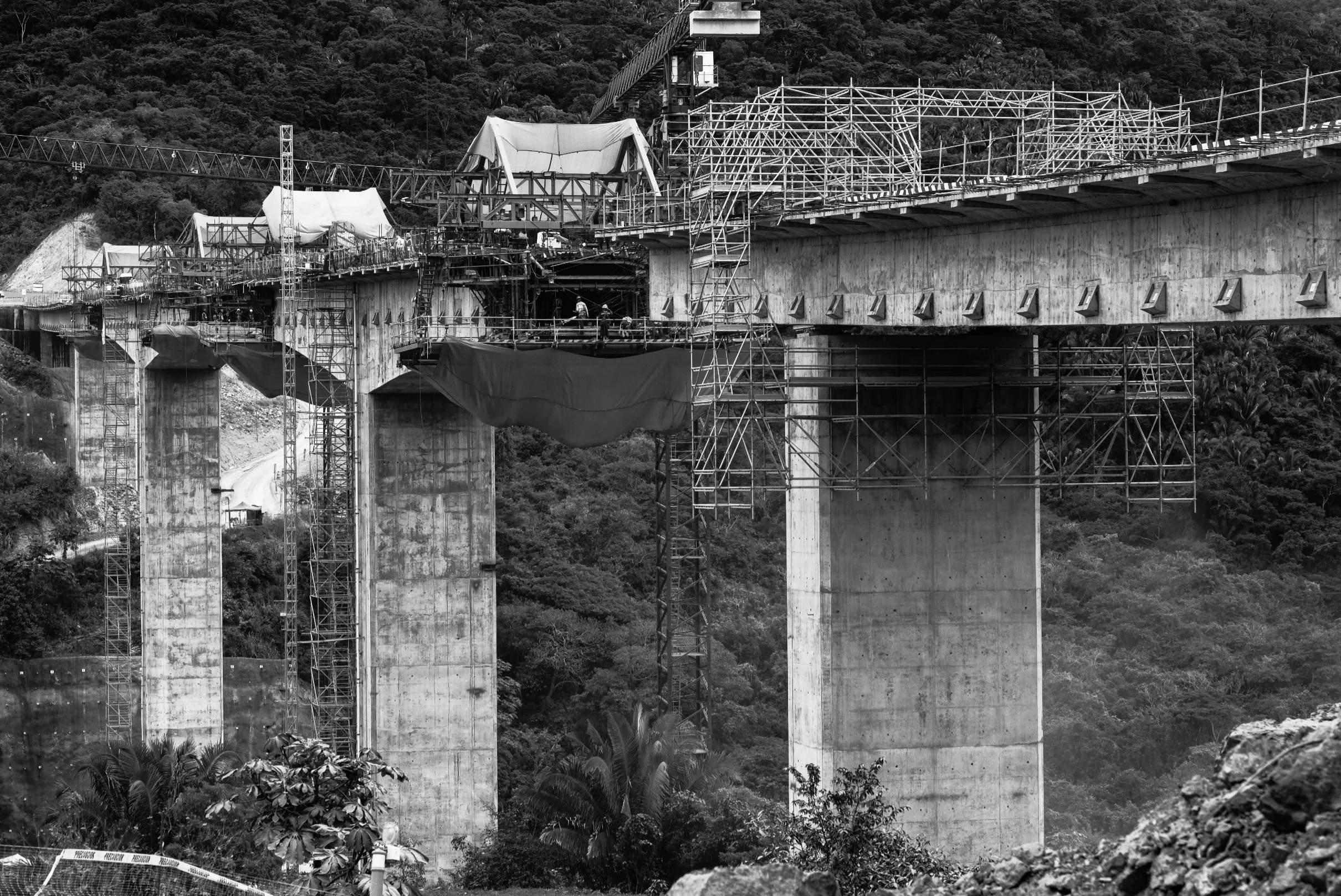
The structure has a total length of 433 metres, with a span arrangement of 67 + 85 + 130 + 85 + 67 metres. The overall deck width is 21.80 metres.
The seismic hazard in the area is classified as moderate, with a design plateau acceleration of 0.38g in the response spectrum.
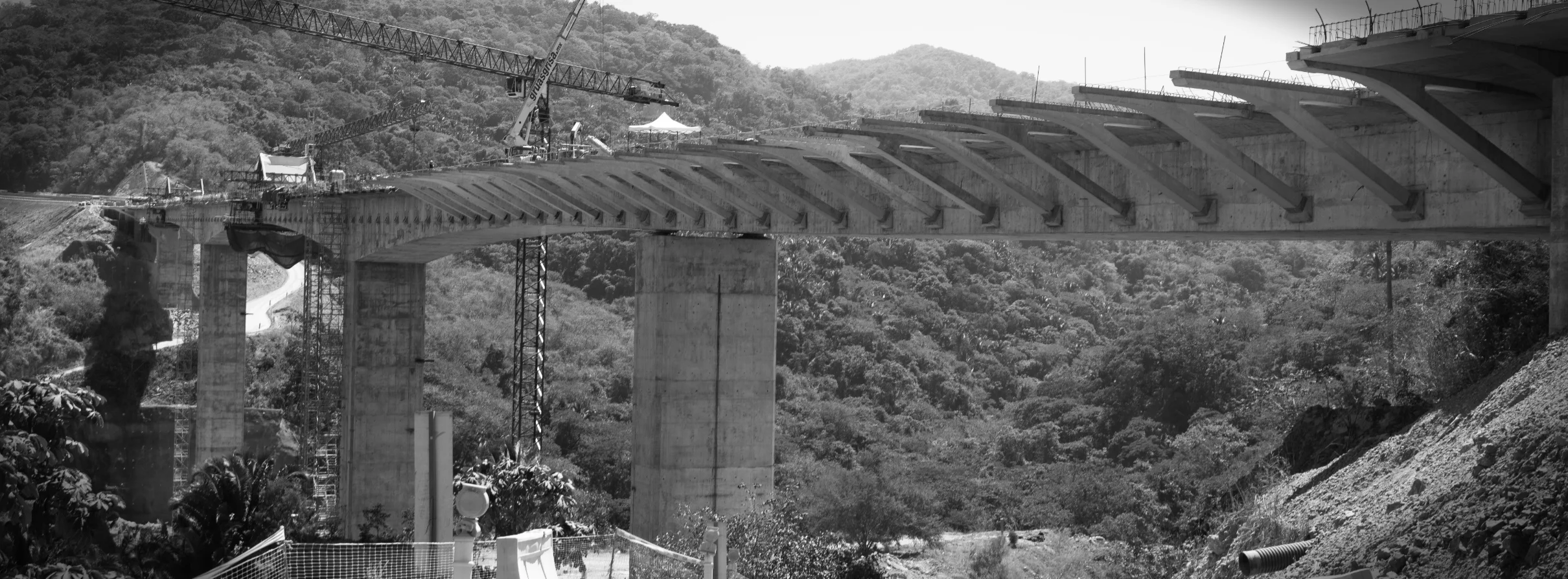
An earlier design envisaged a launched concrete bridge with a 64-metre main span and a total length of 280 metres. However, due to the singular nature of the surroundings and the steep topography of the slopes, a balanced cantilever viaduct with struts was ultimately adopted, which is the structure described herein.
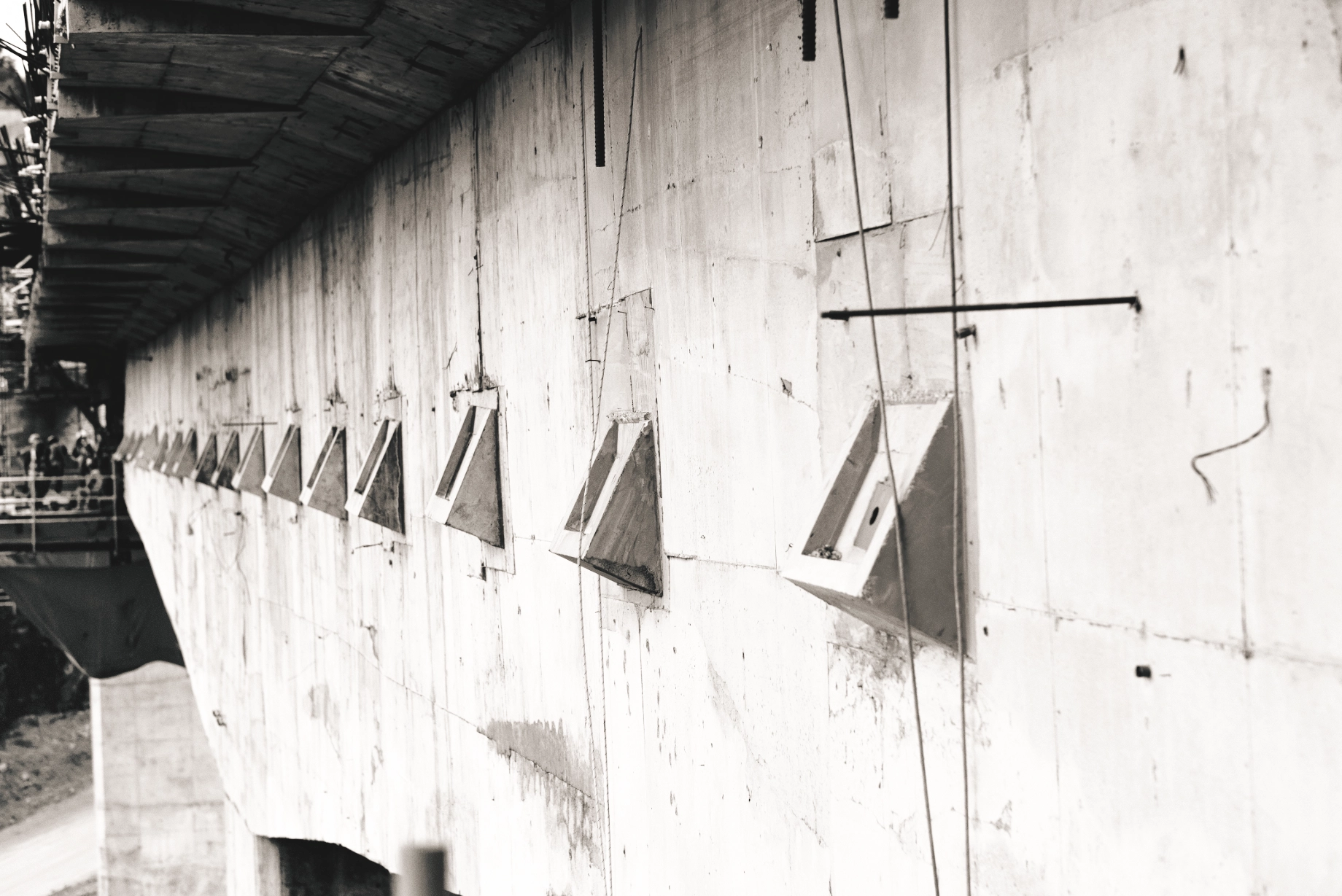
Once the first phase of the structure was completed (closure of the cantilevers), the struts were installed. Lattice half-slabs were then placed over them.
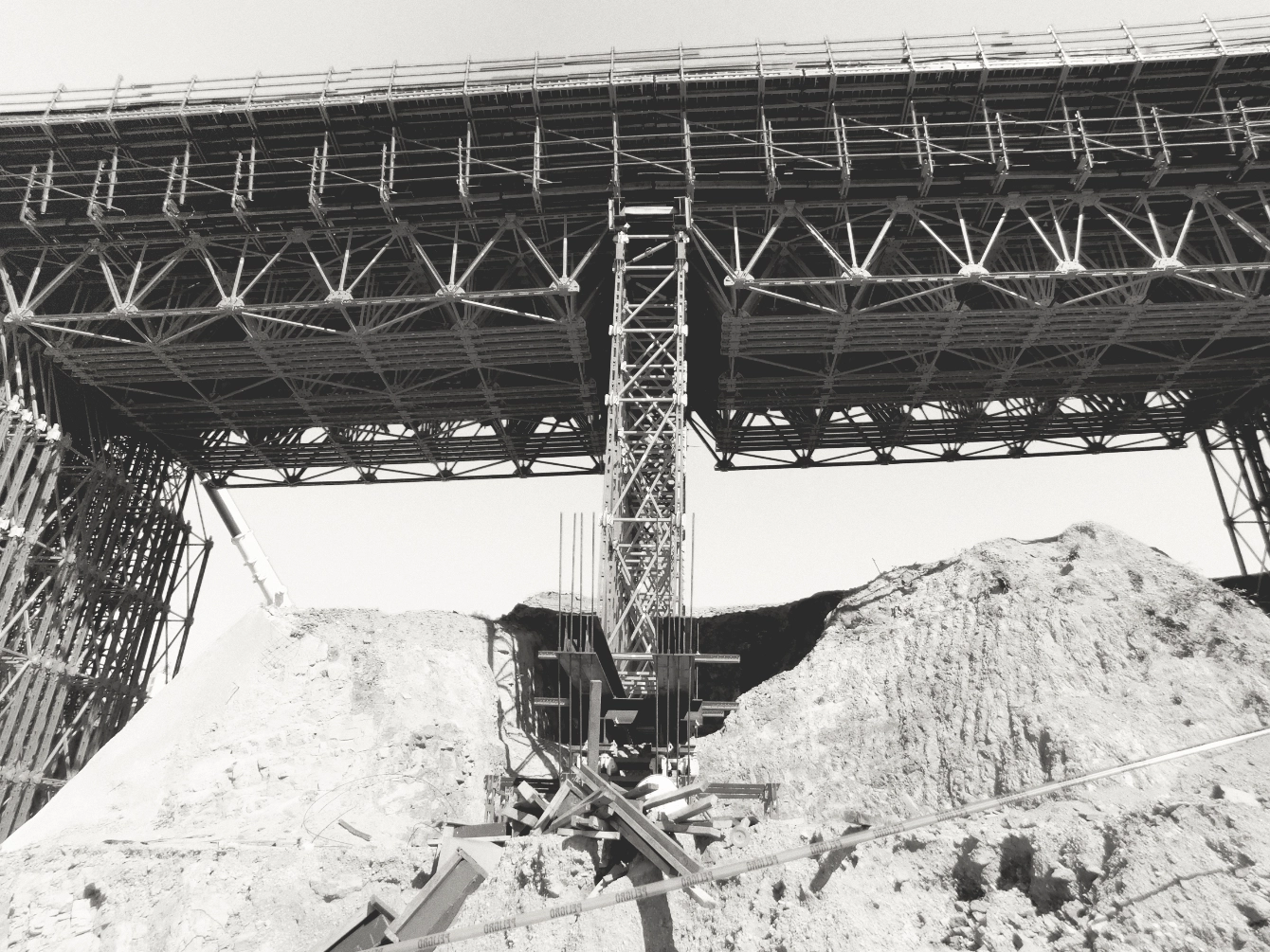
The structural depth varies between 3.25 metres (L/40) and 6.75 metres (L/19). All segments are 3.94 metres long in order to match the layout of the transverse struts. The maximum segment weight is 170 tonnes, close to the capacity limit of the form travellers. The first spans were constructed using ground-supported falsework.
The cross-sectional design was developed with vertical webs to facilitate the arrangement of the transverse struts. The top slab is transversely prestressed.
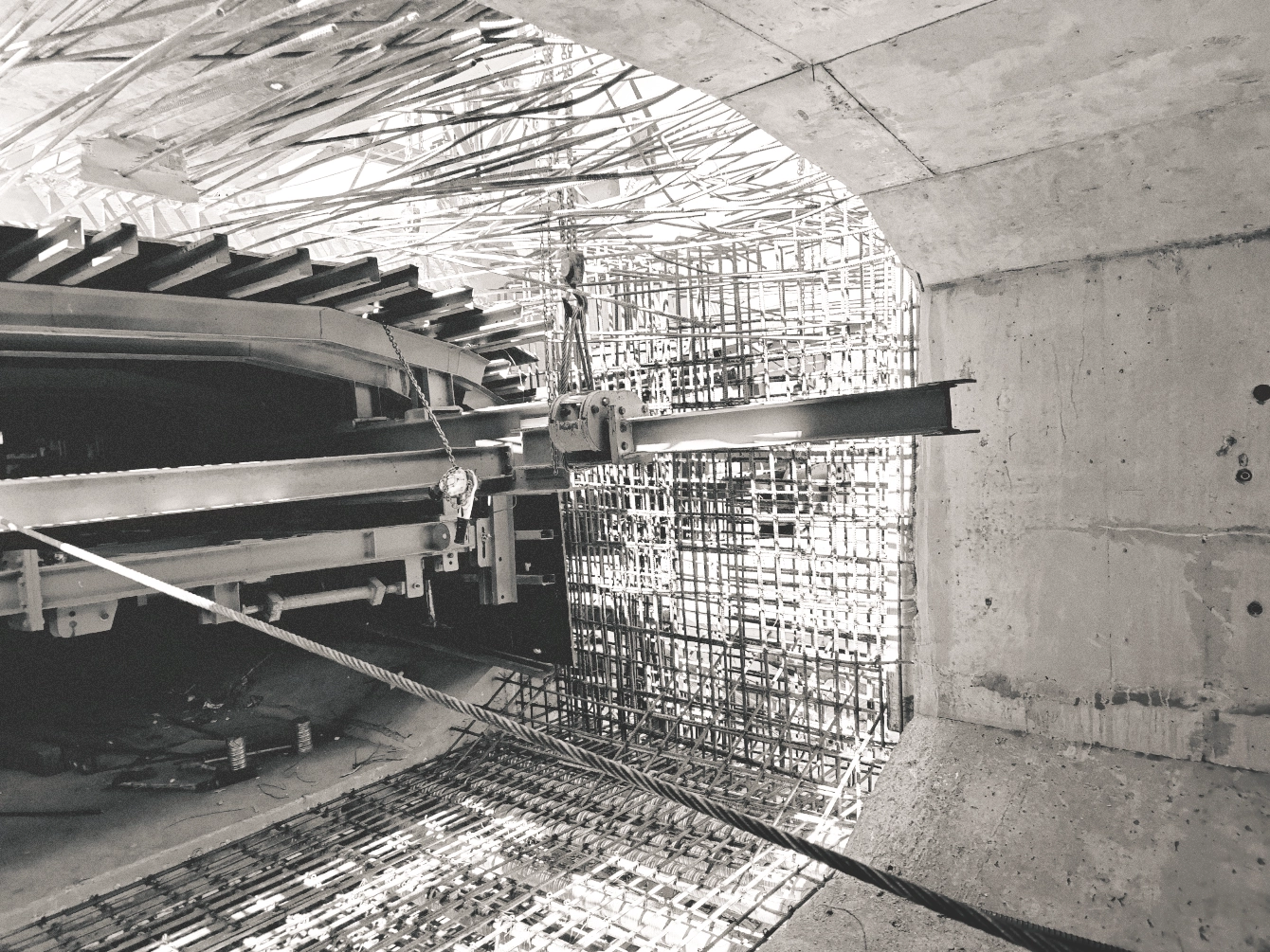
In the longitudinal direction, several prestressing families are provided: top cantilever tendons, bottom continuity tendons, parabolic tendons in the spans constructed on falsework, and external tendons.