/ ABSTRACT
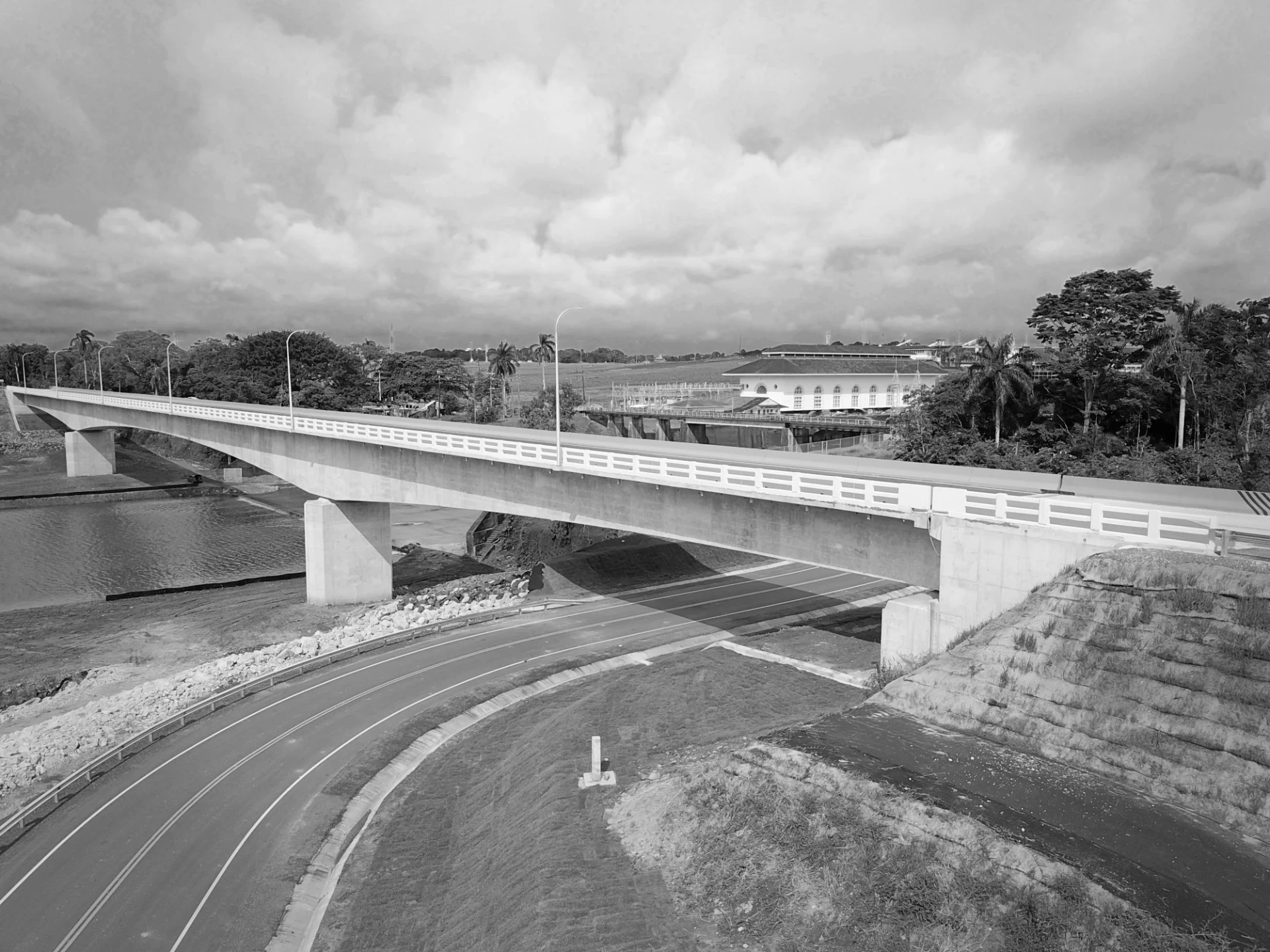
The Chagres River Bridge (Panama) is a three-span structure with span lengths of 68.25+131.00+68.25 m, a width of 10.16 m, and piers 12.20 m high. Horizontal actions in service are resisted using fixed Pot bearings at the piers and guided bearings at the abutments. The foundations consist of 1.2 m diameter piles for the abutments and 1.8 m diameter piles for the piers.
Although the project was originally developed by a local engineering firm following AASHTO LRFD 2014 standards, the award of construction to a joint venture of Spanish companies led k2 Ingeniería to carry out a design review, including the analysis of the construction process and the auxiliary temporary works required for execution. These temporary works included the launching gantry, formwork for the first segments (segments 0 and 1), and formwork for the abutment segments. Following the review, several adjustments and design adaptations were proposed, including modifications to pier construction post-tensioning for stability, connection between piers and substructure in service, adjustments to deck post-tensioning, and revisions of reinforcement detailing. Although the review was positively received by the client, legal constraints in implementing certain modifications prevented the full adoption of the proposed changes.
This paper presents the conclusions of this work, with particular attention to the differences compared to a design carried out in Spain, as well as to the analysis and control of the construction process through the definition of launching gantry camber adjustments and geometric monitoring during construction.
/ RELATED PROJECT